
The Power of the Pause
How a Journal Can Change Your Child’s Life
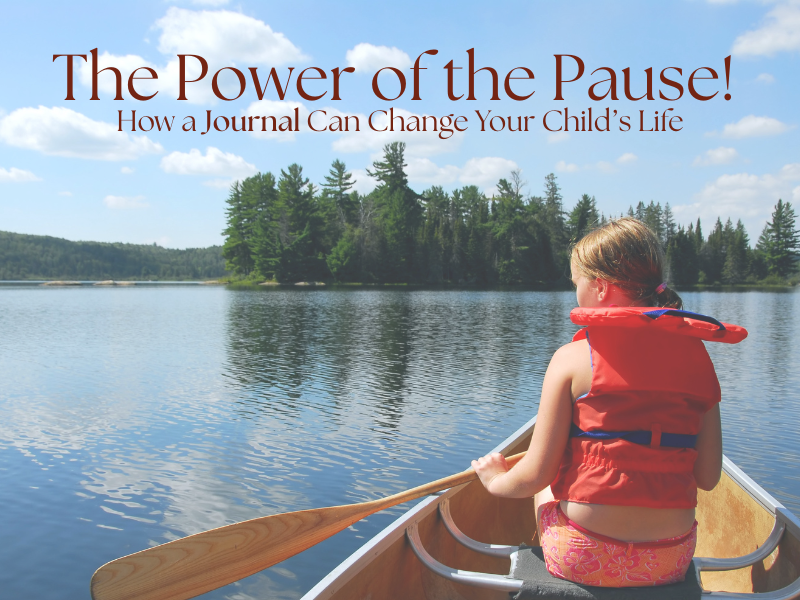
One afternoon, a parent I had been working with came into the office visibly emotional. “You know,” she said, “my 10-year-old wrote something in her notebook last night about being scared of changing schools. She hadn’t told anyone. Not even me. But in her journal, she poured her heart out. I finally saw what she’d been carrying.” That moment has stayed with me.
Having worked with people in all my career and being mom of 2 myself I can say this with absolute certainty: children often carry more than we realise. But unlike adults, they don’t always have the words or the confidence to express what they’re feeling. This is especially true in a world where attention is fractured, routines are rushed, and everyone is expected to “be okay” all the time.
Why Your Child Needs a Pause Button
Between school assignments, after-school classes, social pressures, and endless notifications from digital devices, children today are often overstimulated but emotionally under-expressed.
They go to bed tired but not always peaceful. What they need isn’t more activities or faster answers.
They need a pause. A quiet, uninterrupted moment in their day to ask:
How am I feeling?
What did I enjoy today?
What bothered me?
What do I wish I could change?
This “pause” allows children to decompress. To reflect. To start building an inner compass that helps them navigate the world, not just react to it.
Why Journaling Works (Even When They Don’t “Talk Much”)
I often hear this:
“My son doesn’t like writing.”
“My daughter is not expressive.”
“He bottles everything up.”
And yet, when you give children a safe, judgment-free space—with gentle prompts and colourful pages designed for them—the results are quietly profound.
Journaling helps children:
- Name their emotions (a foundational skill for emotional intelligence)
- Recognise patterns in what makes them happy or upset
- Feel heard, even when they’re not ready to speak
- Strengthen focus and self-regulation
- Celebrate small wins, which builds lasting confidence
It’s not about long essays or perfect grammar. It’s about letting their inner voice emerge, without interruption.
A Journal That Grows With Your Child
At TinyBigVisions, we’ve created age-appropriate journals for children ages 7–11 and 12–16. These are not your typical notebooks.
They’re carefully designed with:
- Prompts that spark curiosity, creativity, and clarity
- Doodle pages that allow expression without words
- Sections that cover everything from dreams to friendships, goals to gratitude
- Language that respects their age and invites reflection without pressure
Every page is an invitation: to explore, to wonder, to discover who they are becoming.
I’ve seen personally and with various parent I work with, how journaling helps children:
- Sleep better
- Manage social anxiety
- Handle transitions (like moving schools or growing friendships)
- And even become better decision-makers
When a child starts tracking their thoughts and feelings, even for just 10 minutes a day, they start noticing themselves. And that self-awareness becomes the foundation of emotional strength, confidence, and clarity.
Your Child’s Voice Deserves Space
In a world that’s always rushing, we owe it to our children to give them space to slow down.
To reflect.
To feel.
To be.
And sometimes, all it takes is a journal.
“Let their voice find space in a world that’s always rushing.”
Explore the TinyBigVisions Journals and give your child the power of the pause—today!
By Priyanka Tewari
Mother of two curious dreamers, Psychology (Hons) graduate, and People & Culture specialist with 15+ years of corporate experience helping individuals find clarity, confidence, and purpose.
